

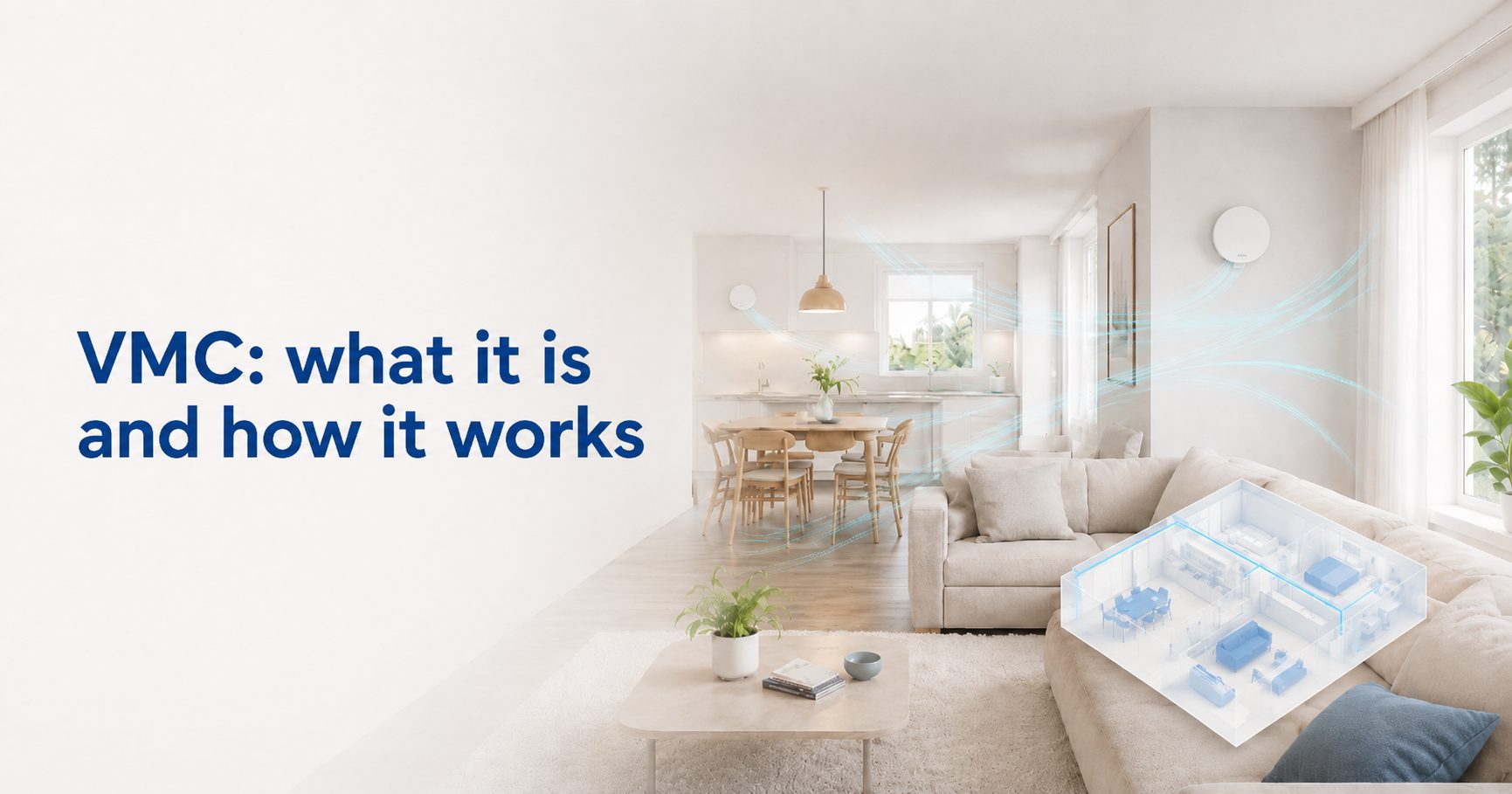
When entering a room, one of the first sensations we perceive is related to air quality. A crowded environment or a space that has gone a long time without fresh air exchange immediately creates an unpleasant feeling. On the other hand, breathing fresh and clean air contributes significantly to our sense of wellbeing.
How can you ensure a constant supply of fresh air, even when opening windows is not possible? The answer is Mechanical Ventilation with Heat Recovery (MVHR).
What is MVHR?
MVHR (Mechanical Ventilation with Heat Recovery) is a system designed to continuously renew the air inside buildings by extracting stale indoor air and introducing fresh filtered outdoor air. At the same time, it recovers the heat contained in the extracted air and transfers it to the incoming air through a heat exchanger, preventing energy from being wasted.
Unlike natural ventilation achieved by opening windows, MVHR provides a constant and controlled air exchange regardless of weather conditions or occupants’ habits.
In modern buildings, which are increasingly airtight and energy efficient, MVHR has become an essential technology for ensuring comfort, healthy indoor environments, and energy savings.
Why Install an MVHR System?
Indoor air in residential and commercial buildings can contain high concentrations of:
- Carbon dioxide (CO₂)
- Excess humidity
- Mould and condensation
- Allergens
- Fine particulate matter
- Volatile Organic Compounds (VOCs)
- Odours and pollutants
The primary function of an MVHR system is to maintain high indoor air quality by continuously replacing stale air with fresh air, reducing the concentration of these pollutants and improving occupants’ wellbeing.
The main benefits include:
- Reduced mould and condensation
- Improved indoor comfort
- Lower concentration of indoor pollutants
- Reduced allergens
- Heat recovery and lower thermal losses
- Reduced building energy demand
When Is MVHR Needed?
Mechanical Ventilation with Heat Recovery is particularly recommended in the following situations:
- New Buildings
Modern homes are highly insulated and have very low air permeability. While this improves energy efficiency, it also makes a controlled ventilation system essential to ensure adequate air exchange and healthy indoor air quality.
- Energy Retrofit Projects
Measures such as replacing windows and adding external insulation reduce natural air leakage and may increase the risk of condensation and mould growth.
- Humidity-Prone Environments
Bathrooms, kitchens, bedrooms, and poorly ventilated rooms can greatly benefit from the installation of an MVHR system.
- Urban Areas
In cities, frequently opening windows may allow smog, pollen, and noise to enter the building. An MVHR system equipped with appropriate filters improves indoor air quality while keeping windows closed.
How Does an MVHR System Work?
The operating principle of a single-room alternating-flow MVHR unit is simple:
- Stale indoor air is extracted and expelled outdoors.
- At the end of the extraction cycle, which typically lasts 60–70 seconds, fresh outdoor air is filtered and supplied indoors.
- A heat exchanger recovers a large portion of the energy contained in the outgoing air (heat during winter and coolness during summer) and transfers it to the incoming air.
This alternating process runs continuously and automatically, ensuring constant air renewal without unnecessary energy losses.
Centralized vs. Decentralized MVHR: What Are the Differences?
There are two main types of Mechanical Ventilation with Heat Recovery systems.
Centralized MVHR
A centralized MVHR system uses a single ventilation unit connected to a network of ducts that distributes air throughout the entire building.
Advantages
- Whole-building ventilation management
- High energy efficiency
- Ideal for new constructions
- Centralized control
When to Choose It
Centralized MVHR is generally the best solution when ventilation is planned during the building design and construction phase, or as part of major renovation projects.
Decentralized MVHR (Single-Room MVHR)
A decentralized MVHR system uses independent units installed directly on the external walls of individual rooms. Each unit independently manages air exchange without requiring ductwork.
Advantages
- Easy installation
- Minimal building work required
- No ducting network
- Ideal for small renovation projects
- Lower installation costs
- Room-by-room intervention possible
When to Choose It
Decentralized MVHR is particularly suitable when:
- Improving indoor air quality in existing buildings
- Ductwork installation is not feasible
- Only specific rooms require ventilation
- Mould and condensation problems need to be solved
- A quick and easy-to-install solution is required
Which MVHR System Should You Choose?
There is no one-size-fits-all answer. The best solution depends on:
- Building type
- Project stage (new build or renovation)
- Availability of technical spaces
- Number of rooms to be ventilated
- Presence of humidity, mould, or outdoor pollution
For this reason, it is important to carefully assess the building’s characteristics and rely on qualified professionals for guidance.
Fantini Cosmi MVHR Solutions
Fantini Cosmi develops Mechanical Ventilation with Heat Recovery solutions designed to improve comfort and indoor air quality in buildings. The product range covers every requirement, from residential to commercial applications, with wall-mounted and ceiling-mounted units, vertical and horizontal installations, air dehumidification systems, and integrated heat pumps.
In particular, Fantini Cosmi offers one of the most extensive and comprehensive ranges of decentralized MVHR units:
- ECOCOMFORT PLUS, the simplest MVHR solution ever, ideal for bedrooms and small residential spaces;
- ECOCOMFORT 3, the most powerful solution, designed for larger rooms;
- RHINOCOMFORT 3, combining high performance with integrated air purification, ideal for urban environments where filtering pollutants, reducing PM and VOCs, and eliminating viruses and bacteria are essential.
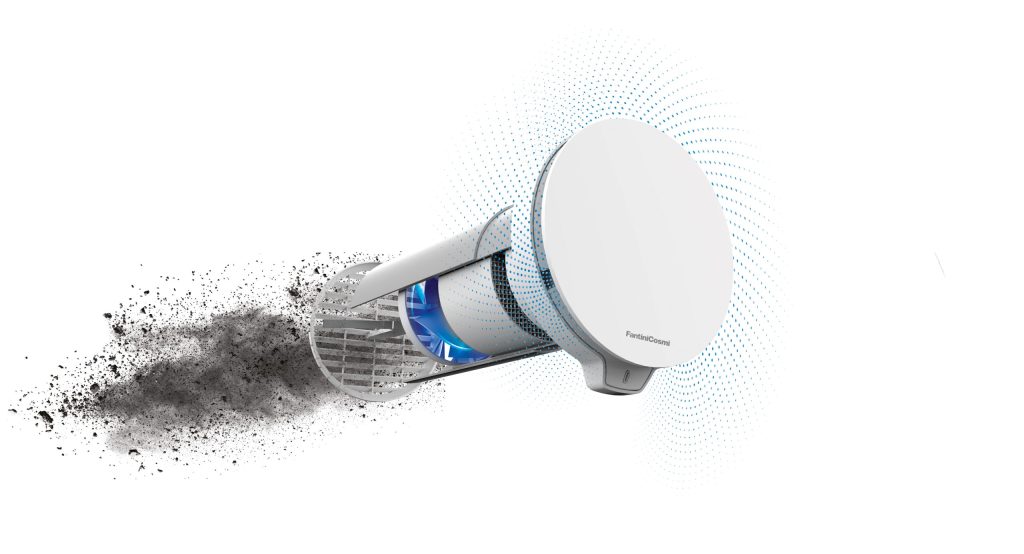
Whether for a new construction project or a renovation, choosing the most suitable ventilation system means investing in people’s wellbeing and the building’s overall energy efficiency.
Managing a project and need expert advice?