


Classrooms are environments where our children spend many hours of their day. Ensuring adequate air exchange in these spaces is essential, not only to promote greater concentration during lessons but also to protect the health of students and teachers.
In poorly ventilated indoor environments, pollutants such as mold, volatile organic compounds, allergens, and dangerous gases like radon can accumulate. The latter in particular deserves special attention.
Radon gas: what it is and why it’s dangerous
Radon is a naturally occurring radioactive gas, colorless and odorless, and therefore difficult to detect. It is produced by the decay of uranium present in the soil and in construction materials, and it is found throughout almost the entire country at varying concentration levels.
Rising from the soil, radon can infiltrate buildings through cracks, gaps, electrical and plumbing conduits, or piping. In enclosed spaces, especially those with poor ventilation, it can accumulate to high concentrations, becoming dangerous to humans.
Ventilation to reduce radon gas concentration
The only way to determine whether radon gas levels exceed the permitted limits is to carry out measurements with qualified experts (radon concentration must not exceed 300 Becquerels per cubic meter – Bq/m³). If this threshold is exceeded, action must be taken.
One of the solutions to reduce radon accumulation is to lower its concentration through adequate ventilation, until its presence in the air becomes harmless. Controlled mechanical ventilation (CMV) systems with heat recovery provide an effective solution.
A best practice example in Bari
When an environmental survey detected radon levels above safety limits in a school in Modugno (Bari, Italy), the municipal administration, acting as contracting authority for the project, entrusted the local company Pellicani & Noviello with the task of installing MVHR units to safeguard the health of students and school staff.
The Pellicani & Noviello team installed eight decentralized controlled mechanical ventilation (MVHR) units by Fantini Cosmi, model ASPIRCOMFORT CLASS 620V WI-FI.
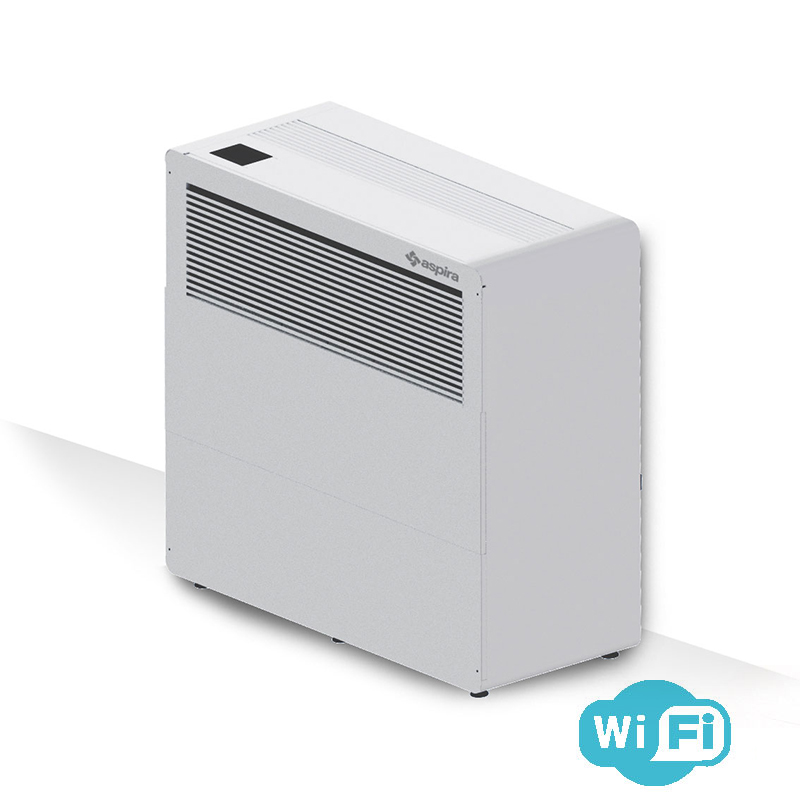
The ASPIRCOMFORT CLASS units were chosen for the high air exchange they provide (maximum flow rate of 620 m³/h), their quiet operation, the possibility of smart control via App through Wi-Fi, and the energy savings they ensure thanks to the integrated heat recovery system.
The installation of the ASPIRCOMFORT CLASS units did not require ductwork, and the work was carried out without interfering with school activities.
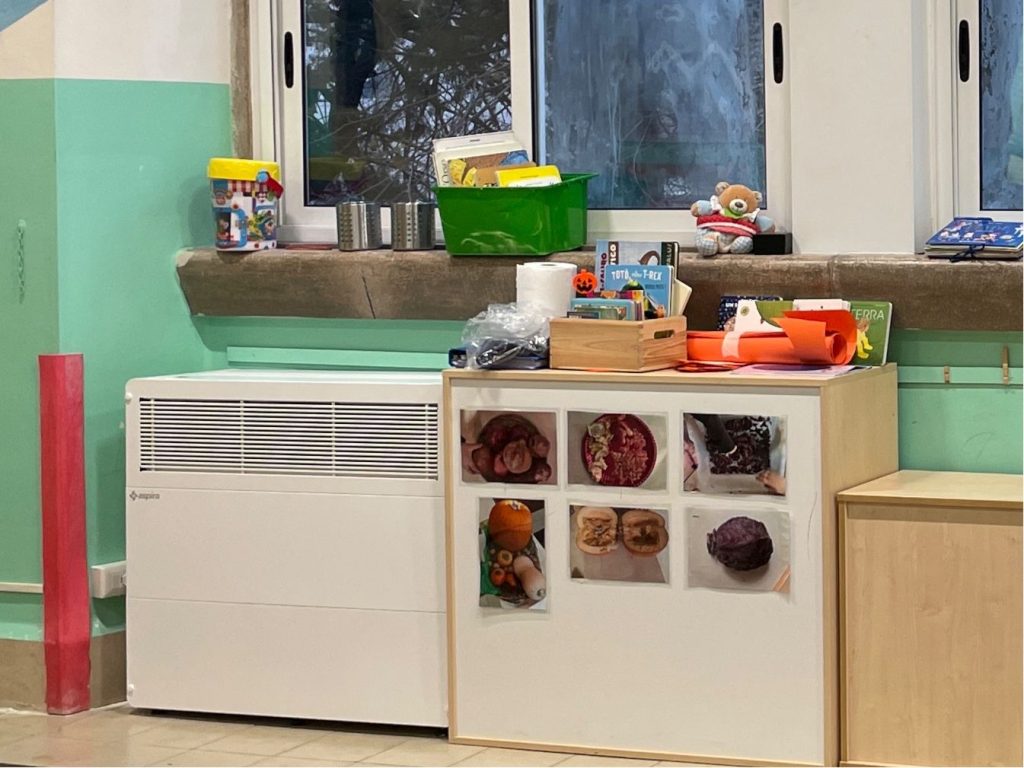
Thanks to this project, today students and staff can live and work in a healthy and comfortable environment.
Are you planning to install controlled mechanical ventilation units in a school?
Contact us for support with your project
CONTACT US