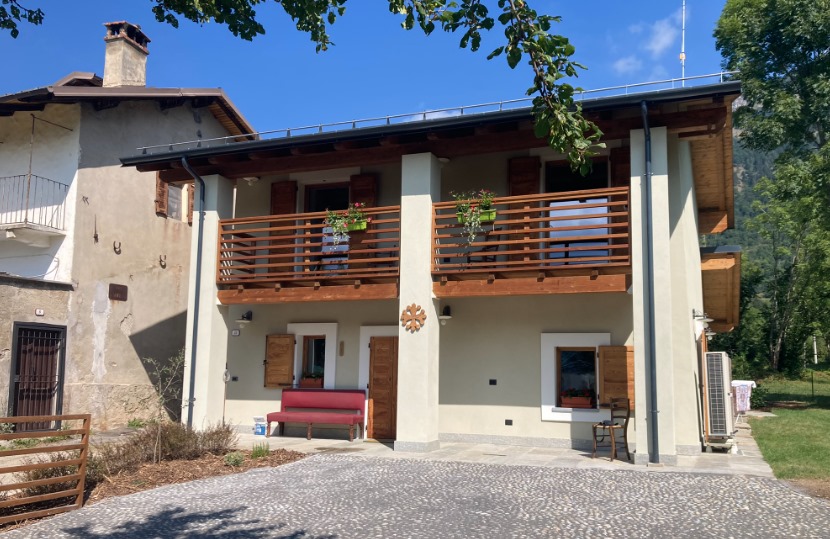

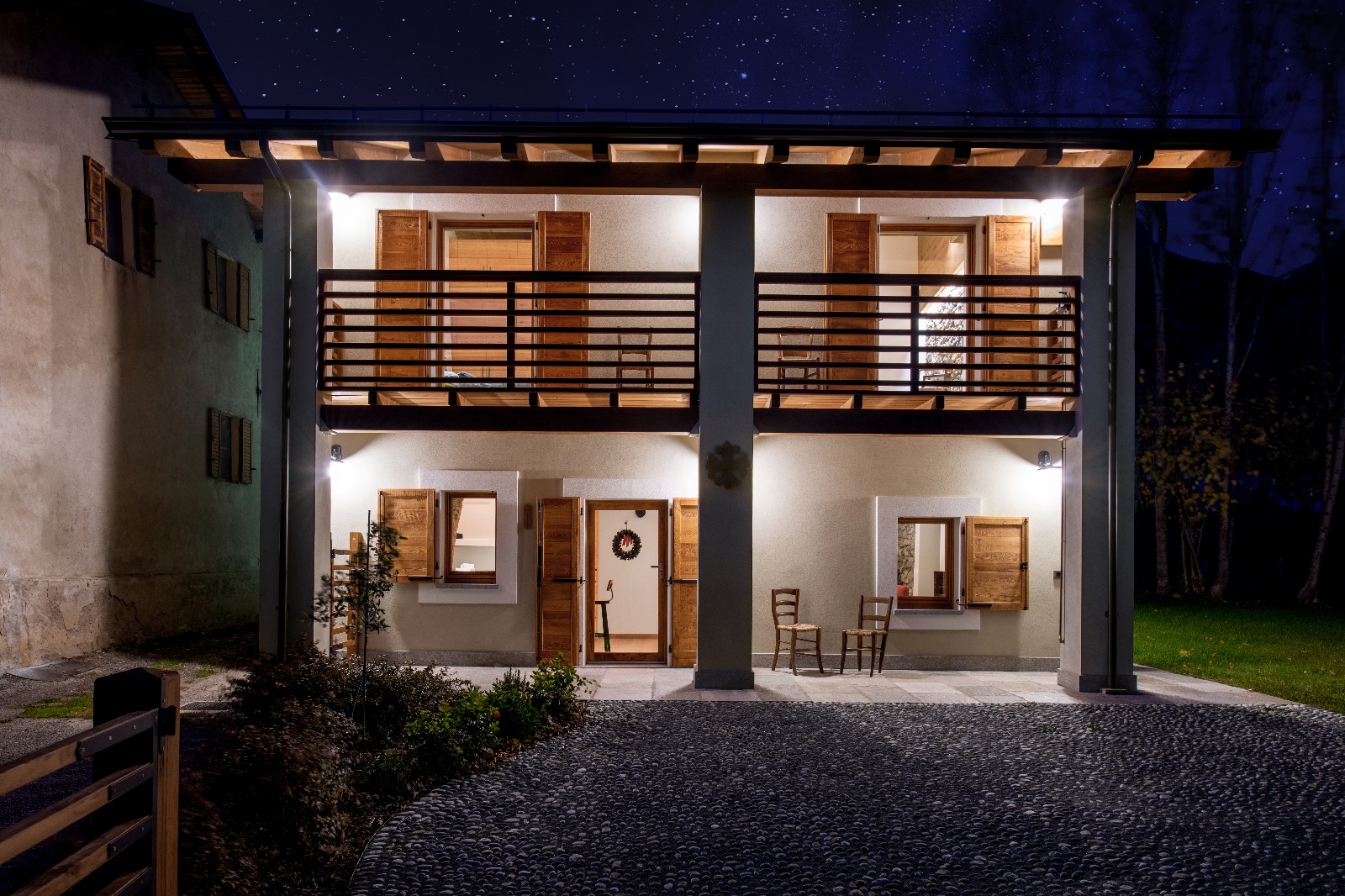
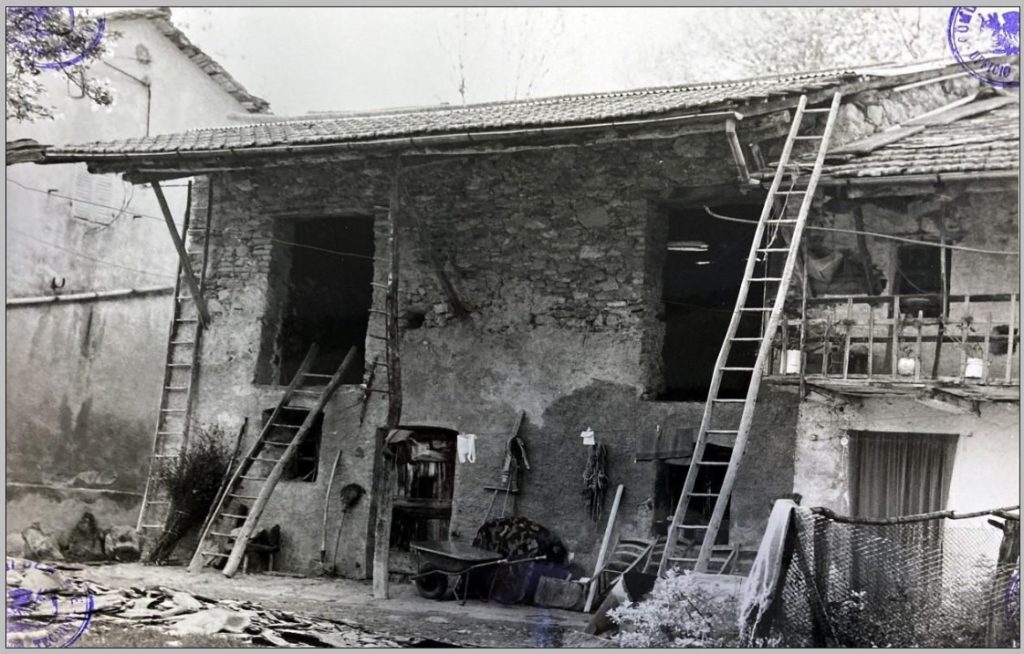
Combining traditional charm with modern innovation—that’s the essence of this renovation project. The transformation involved a rural structure originally used as a stable with hayloft and adjoining living quarters, which has now become a modern, technologically advanced residence with a significant boost in energy efficiency, all while preserving its local heritage features.
The building is located in Demonte (Cuneo, Piedmont – Italy), in a small mountain hamlet characterized by traditional stone and wood constructions. It spans two floors with a total surface area of approximately 100 square meters. The owners—Milan residents with a passion for the mountains—sought in this rustic home a peaceful retreat, a cozy escape from city life, in a valley connected to their roots.
Project Focus
The renovation project, designed by Architect Francesca Chillè in collaboration with construction firm Domustek, had two main objectives:
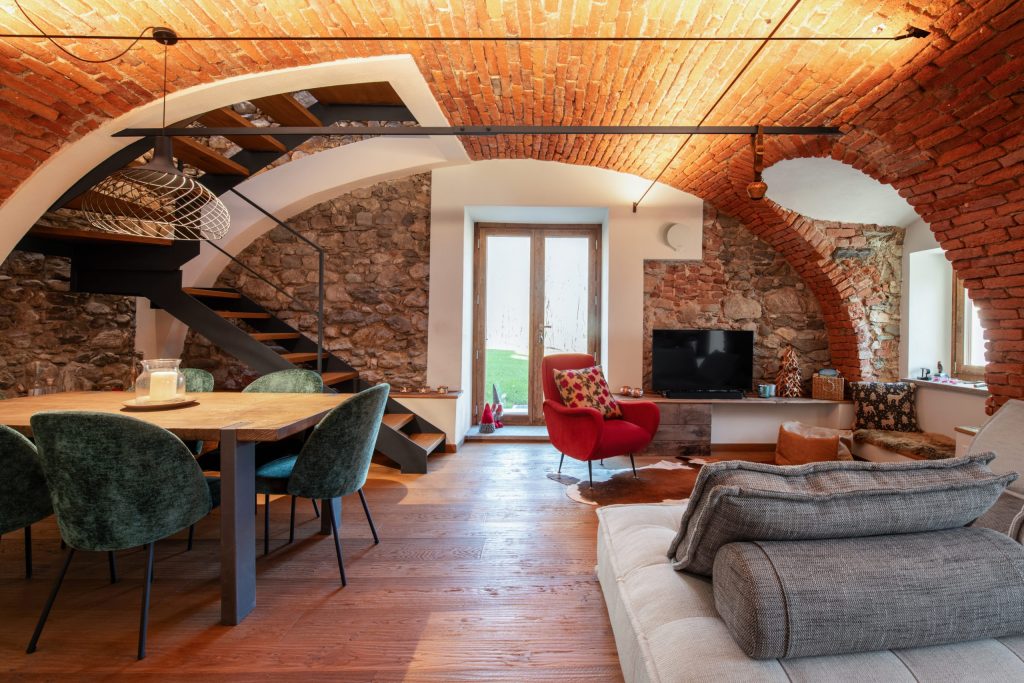
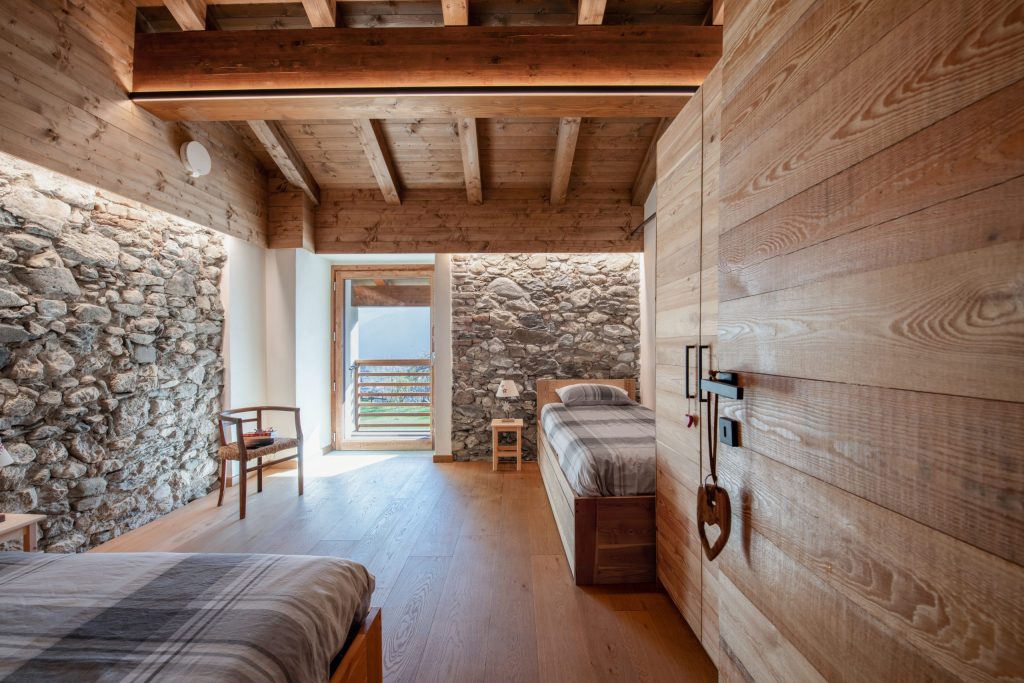
- Preserve the original structure and aesthetics of the building—such as brick vaulted ceilings and stone walls—while reinforcing it to meet seismic safety standards. New elements were designed in harmony with local architecture, using plenty of wood. All wood from the old roof was reused for both indoor and outdoor furnishings.
- Implement advanced technology and systems to achieve the highest level of energy efficiency—Class A4. To reach this energy level from a starting point of Class G, the entire building envelope was thermally insulated (including external wall cladding and low-emissivity windows), photovoltaic panels and battery storage were installed to power all systems, and a home automation system was implemented for remote control of utilities and energy consumption.
Perfect Insulation Made Mechanical Ventilation Essential
The exterior stone walls were reinforced with structural reinforced concrete plaster. A thermal insulation layer of 18 cm was added to the lateral masonry and 20 cm of insulation to the roof and base of the building, along with triple-glazed windows. These upgrades resulted in a perfectly insulated structure.
To ensure proper air exchange—essential for maintaining healthy indoor air and maximizing energy efficiency—a controlled mechanical ventilation system (MVHR) was required.
Due to the house’s two-floor layout (50 m² each) and the need to preserve original masonry without adding ductwork, a decentralized (single-room) mechanical ventilation system was selected.
Six Fantini Cosmi ECOCOMFORT 2 Smart units were installed throughout the home, interconnected and centrally controlled.
At the ground floor in the living area, two units were installed facing each other, along with one in the bathroom. On the first floor, additional units were placed in the two bedrooms and bathroom. The six units work together to ensure constant air exchange, maintain ideal temperature and humidity levels, and prevent mold formation—guaranteeing a healthy indoor environment.
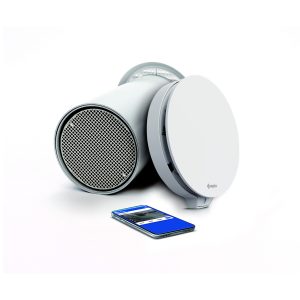
FIND MORE ABOUT ECOCOMFORT 2 SMART
A tranquil retreat, always at the right temperature and humidity
Today, the family can move from Milan to Demonte at any time of the year and enjoy ideal comfort and optimal indoor air quality, in both winter and summer—all remotely controlled.
This project is a virtuous example of sustainable restoration of a century-old rural home, maintaining the characteristics that tie it to its land and history while projecting it into the future through modern technologies.
What an Energy Leap!
- LOCATION: 1930s rustic home in Perosa Sottana, Demonte (CN)
- SIZE: 100 m² across two floors
- ENERGY CLASS UPGRADE: From Class G to Class A4
Upgrades included:
- Seismic improvement via partial demolition and reconstruction
- Installation of external thermal insulation (cappotto)
- Replacement of external doors and windows
- Installation of air-to-water heat pump
- Installation of Fantini Cosmi single-room controlled mechanical ventilation units
- Installation of photovoltaic system
- Installation of battery storage system
- Installation of home automation system
- Installation of electric vehicle charging system
ARCHITECT: Arch. Francesca Chillè
SYSTEM DESIGN: Eng. Ivan Nerbano
STRUCTURAL DESIGN: Arch. Pierangelo Mattalia
EXECUTION: Domustek Srl, with collaboration from MARCHISIO RENATO & C. S.n.c.
Photos by: Alice Centolanza